Showing posts with label guanciale. Show all posts

Thursday, May 26, 2011

Memorial Day Weekend Potato Salad


I never like potato salad.

It was this thick, amorphous substance people bought at the grocery store to serve at barbecue dinners, picnics, and potlucks. It usually involved either over cooked or under cooked potatoes, tons of mayonnaise, and very little flavor. Plus, everyone had a story about getting sick from warm potato salad. I thought, why bother?

Then, I started traveling a lot for work and eating at a variety of restaurants. I finally tried good, homemade potato salad. The kind where you can taste the potatoes, but the dressing just makes the whole thing better. Also, it had bacon. I had to recreate this.

After a couple of attempts I think we got it. Original recipe alert!

Guanciale Potato Salad

Makes enough for 8-10 servings as a side (we make it for parties)

12 medium to small red potatoes (in a pinch any waxy potato would do), scrubbed well
1/8 cup diced guanciale (cured-pork jowl) or bacon or pancetta, optional (if you swing that way)
1/2 cup light sour cream
1/4 cup real mayonnaise
2 tablespoons fresh chives, minced
1 teaspoon oregano, minced
1 1/2 tablespoon Dijon mustard
2 teaspoons red wine vinegar
1/2 red onion, finely diced
sea salt
black pepper (freshly grated is preferred)

1. In a large pot, cover the potatoes with cold water. Salt the water and potatoes generously and bring the water to a boil. Boil potatoes for about 30 minutes or until when poked with a knife the knife enter easily, but with a little resistance. Basically, they will be too hard to mash, but cooked all of the way through.


2. Meanwhile, in a heavy skillet fry the diced guanciale (or whatever) over medium heat until it is crispy. Remove the meat to a paper towel to drain. Reserve 2 tablespoons of pork fat if you can. This sounds gross, but it is a really good idea. Trust me. Allow the fat and guanciale to cool to room temperature.


To make the dressing:
3. Combine the mayo, sour cream, and cooled guanciale fat in a small bowl and whisk until they are mixed.


Add the oregano, chives, mustard, and vinegar. Now add the cooled guanciale and red onion. Taste the dressing and season it with salt and pepper to taste. Be generous! The potatoes need salt to make them tasty. This is also the time when you should add more of any of the ingredients. If you really like mustard, add more etc. The world is your oyster. The potato is your blank canvas.


4. After the potatoes are cooked, drain out the water and let the potatoes cool a little. Now chop them into bite sized chunks and put them in a big bowl.


5. Add the seasoned dressing to the potatoes and mix gently until all of the potato chunks are covered.


This should keep for a couple of days, but ours never lasts that long.

This recipe is not diet friendly. It is a bit of a pain to make. I promise you, if you bring this to a party you will be a hero. People ask us about this dish months later.

Wednesday, April 20, 2011

Guanciale Parmesan Biscuits


Sorry that break was really long, I have been busy with stuff.

Another use for guanciale, right... that is what I promised.


Guanciale can often be substituted for bacon, it is just a little richer and maybe should be applied with a lighter hand. Because we are in love with breakfast, we invented these one sunny Saturday morning to use some tasty jowl and be a vehicle for some farmer's market eggs.


Guanciale Parmesan Biscuits

1/8 to 1/4 cup diced guanciale
1/3 to 1/2 cup grated parmesan cheese
2 cups all-purpose flour
2 teaspoons baking powder
1/2 teaspoon baking soda
1/2 teaspoon salt
5 to 6 tablespoons, cold unsalted, butter cut into large pieces
3/4 cup buttermilk

1. Position rack in the center of the oven and preheat to 450 degrees.

2. Cook the guanciale in an oven safe frying pan, until it is crisp (we use a cast iron pan). Remove the guanciale from the pan and reserve the fat. I know, this is gross, but delicious.

3. Whisk the dry ingredients with the parmesean and the guanciale.


4. Cut in the butter with two knives or a pastry blender until the crumbs are the size of bread crumbs. I never really know what this looks like, but just sort of make it up. It starts to look more like coarse bread crumbs when my arm gets tired. Strange, huh?

5. Add all of the buttermilk and stir it in with a rubber spatula until all of the ingredients are moist. We use this buttermilk from a local dairy, it is really thick and creamy. The best I have ever used.


Then use your hand to gather the dough into a ball and knead it gently along the side of the bowl until the dough is in one ball. Do not over knead it, or it will be tough and gross.


6. Roll out the dough until it is about 1/2 inch thick. Use a biscuit cutter or knife to cut out the biscuits. Ball up the edges and roll them out again, etc. Do not overwork!


6. Place the biscuits on the non-stick skillet (the one with the guanciale fat). Bake for 10 to 12 minutes. Eat immediately, preferably with an egg on top.

Sunday, April 10, 2011

What do I do with Guanciale?

If you were intrigued by my post about Guanciale (cured pork jowl), the natural question you might ask is, now what do you do with that stuff?

At first, we had no idea. Mostly we made the guanciale because our normal meat farmers did not have any pork belly (for bacon) and we were up for a new adventure. We had no idea what one might use the stuff for. We knew from our research that it is traditionally used as the base for pasta sauces or in lieu of pancetta in spaghetti carbonara. We honestly do not eat those two things too often, so some non-Italian uses were needed.

Guanciale is not the United State's most common cured meat product (shocker, I know). I have rarely seen it for sale commercially at super specialty stores. Therefore, I had never had the occasion to taste any recipes using it and internet searches based on the ingredient yielded vast quantities of traditional Italian pasta dishes. Delicious I am sure, but we have a whole jowl to consume. That is a lot of pasta sauce.

Our finished jowl has this amazing nutty, rich meat flavor. It is pretty salty. The texture is comparable to proscuitto, but the flavor is pretty distinctive. It is not the sort of thing you can snack on with cheese and crackers. A little goes a long way.

The first thing we made was a salad and then we moved onto some guanciale parmesan biscuits.


Guanciale Beet Salad

1 beet
about 1/4 cup (or to taste) greek feta , crumbled*
about 6 thin slices of guanciale (you could use bacon too)
2-3 slice stale bread
mixed salad greens**, washed and dried
good tasting olive oil
good tasting balsamic or red wine vinegar
1/2 teaspoon fresh oregano (or whatever you have growing), chopped
salt
freshly ground pepper

1. Wash, dry and trim the beet. Double wrap it in aluminum foil and put it in the oven at 450 degrees for about one hour or until it is soft. We usually do a bunch of beets at once and eat them for awhile. Remove the beet from the oven, let it cool and peel off the tough outer skin (it should come right off). Slice the beet and chop it into bite size pieces. Set aside.

2. Heat about 2 tablespoons of olive oil in a frying pan at about medium heat. Cut the stale bread into about 1 inch square cubes. Add the bread to the oil and stir to coat toasting the bread until it is a dark brown color (but not burnt). Remove the bread from the pan and allow it to cool.

3. Put the pan back on the stove. Add the thin slices of guanciale to the pan and fry them until they are crispy. Discard the fat (I know, sad) and crumble the guanciale. Set it aside.


4. Chop the salad greens into your preferred size. Put these greens into a large salad bowl. Top the greens with the cooled croutons, crumbled feta, diced beets and crumbled guanciale.

5. In a small bowl (I use a pyrex measuring cup), pour a couple of tablespoons of vinegar, whisk in the salt, pepper, and oregano. Slowly pour in about 1/8 cup olive oil in a steady stream, whisking it while you pour (I usually just eyeball this until it looks right amount).

6. Toss the dressing with the salad. Eat immediately, wilting salads are not so tasty.
*I studied abroad in Greece. I do not believe that most products sold in American grocery stores and made with cow's milk deserve the name feta. Feta should be made with sheep or goat milk and packed in brine. Please do not buy the pre-crumbled stuff. Do me a favor. Please.

**We get our lettuce from the farmers market and the bags usually include red leaf, green leaf, butter lettuce, arugula, and more. It is my favorite way to buy lettuce because it includes variety but we do not have half a head of each kind rotting in our fridge. I also find that the farmers market lettuce is more flavorful, tender, and lasts longer than the packaged supermarket lettuce mixes. At our farmers market (Carrboro, NC), salad mixes are available year-round.

Ok, this post is already really long. Biscuits coming up after these messages.


What, no messages?


Well, just take a break then.

Monday, March 28, 2011

Guanciale

Welcome back to Sarah and Derek's Charcuterie Experiments!

We make bacon, which is cooked and stored in the fridge... so it feels safe. Who needs safety? Not Derek and I. Nope. We need adventure, new things, variety.

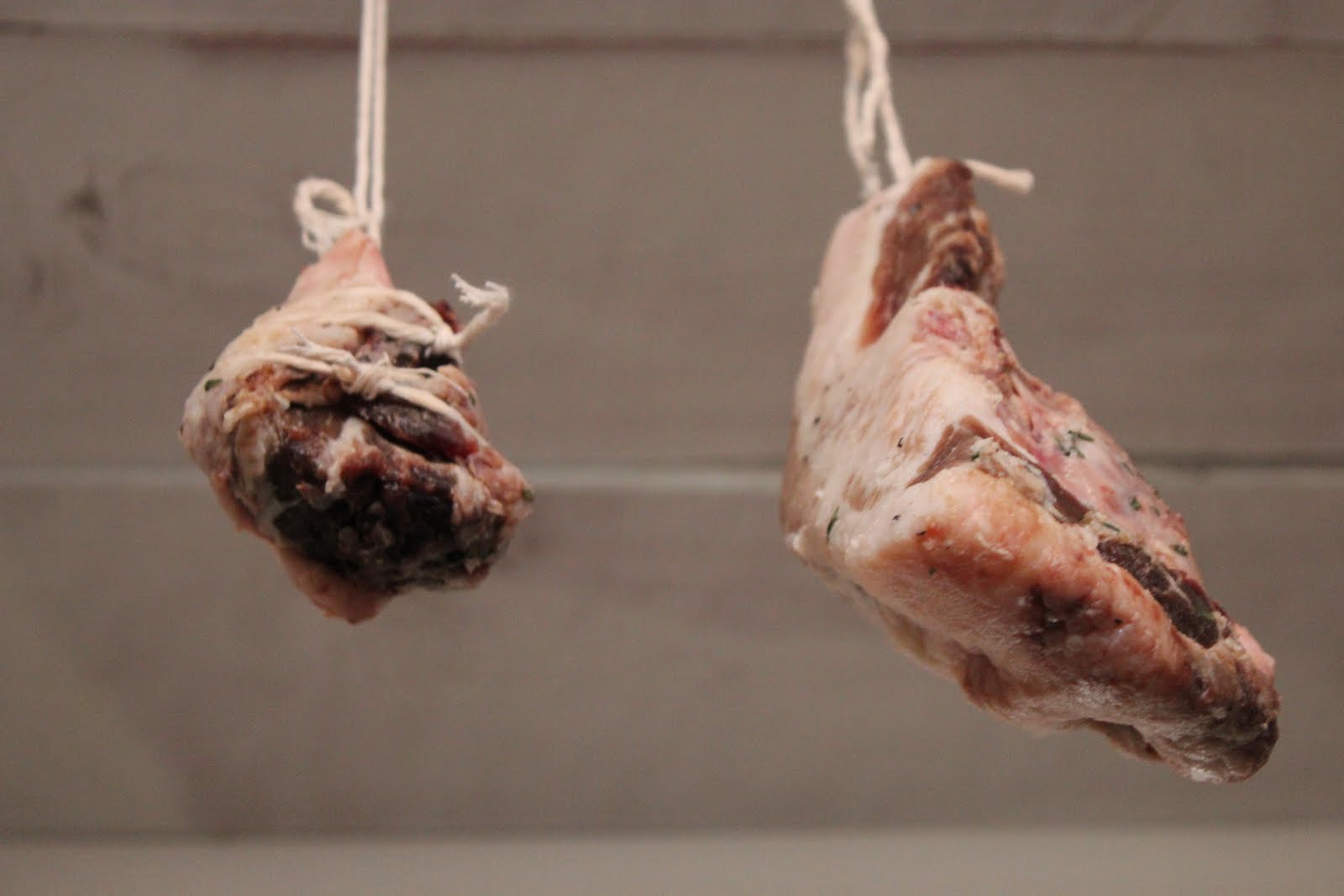
The farmer convinced us to buy a pork jowl when they did not have any belly in stock. He told us all we need to do is cover it in salt and let it cure in the refrigerator. Then we need to hang it up for three weeks. Yes. Hang it up, outside of the refrigerator. RAW PORK. Hanging. At room temperature. Fortunately, this is a really cheap cut of meat.

We did some research. Guanciale is an Italian cured meat, similar to pancetta. It is unsmoked and made from the pig's jowl or cheek. It is traditionally used in Italian pasta sauces and spaghetti carbonara.

It is delicious.

Guanciale
from Charcuterie by Michael Ruhlman and Brian Polcyn

1. Obtain pork jowl or cheek. We got ours from these great folks at our farmers market, but most butchers should have them. Every pig has two, but they are not a popular cut so some butchers probably will not carry them. Check your local butcher or carniceria.

2. Remove any pieces of skin, tough tissue, or glands you can see.

3. Make dry cure. Combine 70 grams (1/2 cup) kosher salt*, 70 grams (1/3 cup) sugar, 2 mashed cloves of garlic, 15 black peppercorns (cracked with something heavy), and 1 large bunch thyme.

4. Rub cure all over jowl, make sure to cover the whole jowl. Place this in a large plastic bag. Put this bag in the refrigerator for 1 week. Turn the jowl everyday to redistribute the liquid that will collect. This process draws moisture out of the meat so it does not get gross during the drying process.


4. After a week in the refrigerator, take the jowl out and rinse as much of the cure off as you can. Then pat the jowl dry. Make sure you get it really dry.

5. Then poke a hole in a corner of the jowl and run some butchers twine through the hole. Then hang this up in a cool place with plenty of air circulation. The temperature should not get above 70 degrees Celsius. Our reading suggests the jowl should be gently caressed by the winds of Tuscany. We settled for a ceiling fan.

Now if you were really organized you would weigh the meat before hanging it and then you could know it was done when it weighed 30% less. We did not weigh ours. We just waited for three weeks until it felt firm to touch.

6. Watch the jowl. It may grow some mold. Apparently, white mold is okay and black mold is bad. When it is done scrap off any molds that look nasty (black mold would indicate the meat has spoiled). Then eat it...

So pretty...
This meat makes me hungry.
P.S. Best knife ever.

It should not need to be cooked before consumption, it has been "cooked" in the salt. We definitely crisped it for some applications. I would also recommend checking out Michael Ruhlman and Brian Polcyn's book. It is really well-written and has many more details about the recipe.

Coming soon guanciale recipes...